


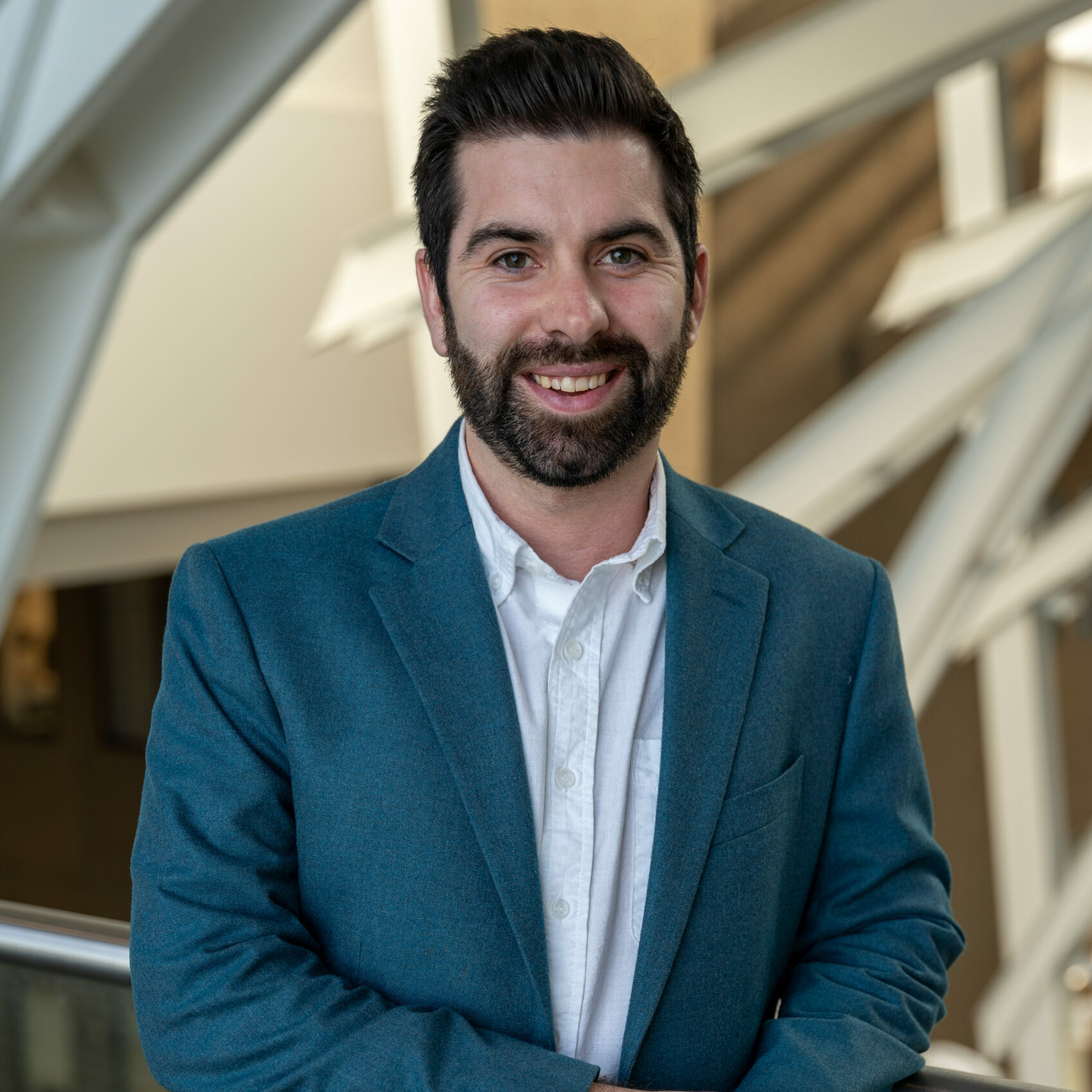
Dr. Dylan O’Sullivan is a cancer epidemiologist and health services researcher in the Department of Cancer Epidemiology and Prevention Research (CEPR) of Cancer Care Alberta and an adjunct assistant professor in the Departments of Oncology and Community Health Sciences at the University of Calgary. He has a broad research program focused on reducing the burden of cancer across the cancer control continuum with the use of big data and novel data analytics. His primary research interests include the etiology of early-onset cancers, risk-stratified approaches to screening, and understanding the risk of developing subsequent primary cancers among cancer survivors.
Dr. O’Sullivan joined the department in December 2022 and to date has published close to 100 peer-reviewed manuscripts in leading scholarly journals of oncology and epidemiology. He is currently establishing a research program around precision prevention, screening, and follow-up surveillance of cancer survivors for subsequent primary cancers using cohort and administrative data sources. His research program involves collaborations with researchers across multiple disciplines including computer scientists, qualitative researchers, molecular epidemiologists, medical oncologists, cancer screening experts, and patient advisors.
Dr. O’Sullivan completed a BA in Sociology at Dartmouth College (2015) and worked there as a molecular epidemiology research assistant for Dr Brock Christensen. Subsequently, he completed a mini-Master’s in Epidemiology (2016) and PhD in Public Health Sciences (Epidemiology) from Queen’s University in 2020, where his work focused on population attributable risk estimation and etiologic research using data from both case-control and prospective cohort studies. He then completed a 2-year CIHR-funded postdoctoral fellowship at the University of Calgary conducting interdisciplinary research on reducing incidence and improving outcomes of early-onset colorectal cancer patients. During his postdoctoral fellowship, he also collaborated extensively with clinician scientists on several real-world oncology outcome studies.